
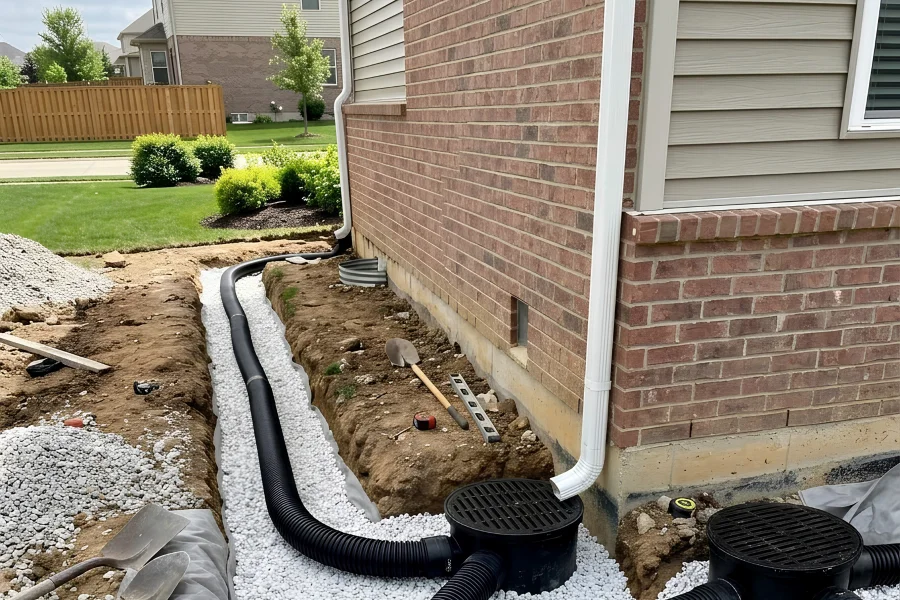
Texas rain does not knock politely. It shows up all at once, and your roof sends it straight to one little pipe. We just finished a downspout fix for a homeowner in Humble where the water was pooling right next to the front wall.
At Texas Rainmakers, we provide rainwater drainage solutions for homeowners across Harris County, helping prevent standing water, soggy lawns, and foundation problems. Here’s where your downspout water should go and how to keep it away from your home.
Where Should Your Downspout Drain?
Your downspout should send roof water far away from your house, to a spot where it can leave your property or soak in safely. A good rule is at least five to ten feet from the foundation.
A Safe Discharge Point
A discharge point is the place where the water finally comes out. It can be a lawn, a street drain, a rain barrel, or an underground drainage line. We pick the spot after a site visit, because every yard slopes a little differently.
Places You Should Avoid
Do not aim water at your side yard fence, your pool, or your neighbor. Water that dumps next to the house can cause standing water, foundation damage, and a very awkward chat over the mailbox.
Why Is Downspout Drainage a Big Deal in Humble?
Houston clay is the main reason. It is expansive clay, and it holds water like a sponge. When the soil gets wet, it swells. When it dries, it shrinks. That movement can crack slabs and walls over time.
Heavy Rainfall Adds Up
A big storm can send thousands of gallons off a roof in a short time. All that concentrated runoff hits one spot unless you give it somewhere to go.
During heavy storms, roof runoff can overwhelm the surrounding soil and leave water collecting around your home. Understanding how proper drainage controls stormwater runoff can help you prevent recurring puddles, soil erosion, and potential foundation problems.
We just cleared a clogged line in the Atascocita area where one storm turned a flower bed into a pond.
Damage You Can Avoid
Poor drainage can lead to structural damage, soft soil, and a lower property value. It can also speed up rust on pipes and metal parts. A small fix now beats a big repair later.
What Are Your Drainage Options?
There is no one answer, so here are the choices we use most often:
Downspout extensions: These simple pipes carry roof water away from the wall, and they are a low-cost way to start.
Underground drainage: We bury solid pipe that carries water to a safe exit, so your yard stays clear and tidy.
French drain: A French drain uses perforated pipe in a gravel trench to move water in the soil away from problem areas.
Catch basins and area drains: These collect water in low spots and send it through drain lines to the discharge point.
Regrading: We reshape the ground so water flows away from the house instead of toward it.
How We Pick the Right One
We look at your slope, your soil, and where the water naturally wants to go. Then we match the fix to the problem. French drain installation is great for wet side yards, while extensions work well on small, simple jobs.
How Do You Keep Your Gutters and Drains Working?
Even the best setup fails when something blocks it. Leaves, roof grit, and mud build up fast, especially near trees.
Clean Gutters Often
Gutter cleaning twice a year helps stop a clog before it starts. Gutter guards can also reduce blockage, though they still need a quick check.
Check the Drain Lines
If water backs up or comes out slowly, a drain line may be stuck. Drain cleaning and a camera check can find the problem fast. We use advanced tools to look inside the pipe, so we are not guessing.
When Should You Call a Professional?
Call us if you see standing water that lasts more than a day or two after rain. Also call if you notice cracks, wet walls, or a soggy patch that keeps growing. A repair company that knows local soil can save you from guesswork.
We serve homeowners across Humble, Kingwood, Atascocita, and Cypress, and we do both residential and commercial work.
Water collecting near your foundation after every storm is a warning sign you shouldn’t ignore. Understanding how proper gutter and downspout drainage protects your foundation can help you identify why roof runoff needs a safe path away from your home.
Frequently Asked Questions About Drainage Solutions (Humble, TX)
1. Can downspout water damage my foundation?
Yes. When roof water drops next to the house, the soil gets soft and shifts. That movement can crack the slab and walls.
2. Should I use a French drain in my yard?
Yes, if water keeps pooling in one area. A French drain collects extra water and moves it away through perforated pipe.
3. Can I fix downspout drainage myself?
Sometimes. Simple extensions are an easy DIY job, but buried pipe and grading need the right skill and tools.
Fix Your Downspout Drainage With Texas Rainmakers
Good drainage is simple when you break it down. Send roof water far from the house, keep gutters clean, and pick a setup that fits your soil. Your foundation, your lawn, and your wallet will all thank you.
If you need help, call Texas Rainmakers today at (281) 852-4331. We handle drainage installation and repair, French drains, and gutter fixes for homes and businesses in Humble and the nearby area.
We will visit your property, explain what we find in plain words, and build a plan that keeps your yard dry.