
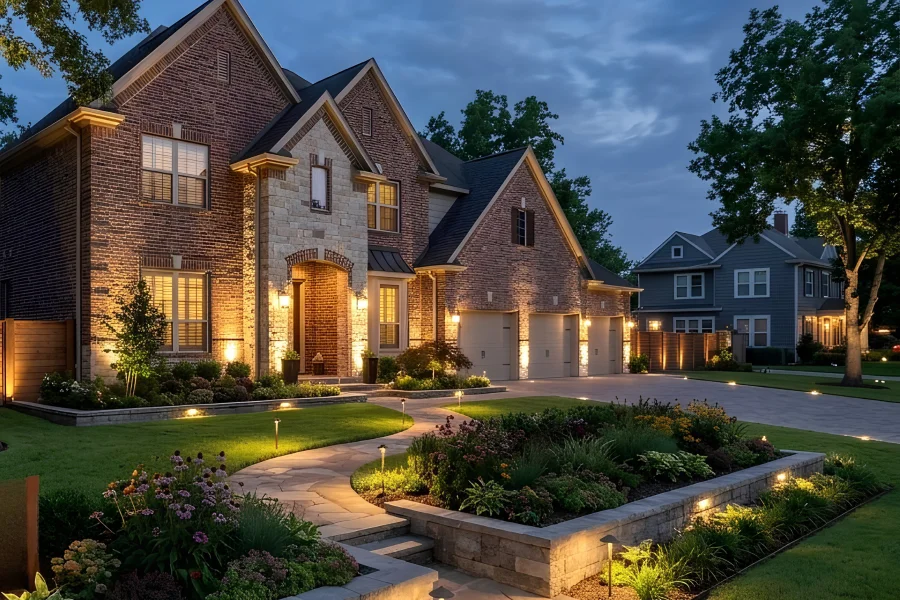
Nothing makes a homeowner grumble like walking outside at 9 PM and finding the path lights dark. Or worse, seeing them glow at noon while the sun is blazing.
At Texas Rainmakers, we just finished a lighting setup for a family in Humble, and the first thing they asked was, “When should the lights turn on?” Good question!
As low-voltage landscape lighting installers, we know that the right timer settings can save money, improve nighttime visibility, and keep your outdoor space looking great. Let’s get yours set up the smart way.
What Is a Landscape Lighting Timer and Why Does It Matter?
How a Timer Controls Your Lights
A landscape lighting timer tells your lighting system when to turn on and when to turn off. It connects to the transformer, which changes high-voltage power into safe low-voltage power for your fixtures. Without a timer, you would have to flip a switch by hand every night. That gets old fast, and let’s be honest, we all forget sometimes.
Why Good Settings Help You
A well-set timer gives you a well-lit yard when you need it and saves power when you do not. It also helps with energy efficiency, since LED landscape lights only run during the hours that matter.
What Are the Types of Landscape Lighting Timers?
Simple Timer Options
Here are the types of landscape lighting timers we install most often:
A mechanical timer uses a round dial with little pins, and it is simple, cheap, and easy to learn.
An analog timer is a lot like a mechanical timer, but it can drift off when the current time changes.
A digital timer lets you set exact times with buttons, and it can hold more than one lighting schedule.
A manual timer needs you to switch the lights on and off yourself, so it works best for people who love a daily routine.
Smarter Control Options
A photocell timer uses a light sensor to detect daylight, so the lights turn on at dusk and off at sunrise by themselves.
An astronomical timer knows the sunset times for your area, and it adjusts every day on its own.
A smart timer connects to your smart home app, so you can change settings from your phone.
What Are the Best Timer Settings for Humble, TX?
A Good Starting Schedule
For most homes here, we suggest turning the lights on at dusk and off around 11 PM or midnight. That gives you plenty of glow for dinner guests and evening walks.
If you like waking up early, add a short morning run from 5 AM until sunrise. In summer, dusk comes late in Texas, so a fixed time can leave you in the dark too early. That is why we love a photocell or astronomical timer.
Adjusting for the Seasons
Days get shorter in winter, so the lights need to work longer. When your timer is set the same all year, you may waste power in summer or lose light in winter.
We just replaced an old mechanical timer for a customer who had to reset it every season—thinking about upgrading your outdoor lighting before the colder months arrive?
Find out whether winter is a good time to install low-voltage landscape lighting, and what homeowners should consider before scheduling an installation. Now the timer handles it all, and he gets to skip the ladder.
Should I Use a Photocell or a Timer?
Photocell Sensor Pros and Cons
A photocell sensor reads daylight levels, so it turns lights on when the sky gets dark. It works great, but a shady spot or a tree can trick it. Keep the sensor away from porch lights and other artificial light, or it may think it is still daytime.
Why Some Homes Use Both
Many homeowners pick both. The photocell turns the lights on at dusk, and the timer shuts them off at night. It is a nice pairing, like peanut butter and jelly.
What Else Should I Check With My Lighting Setup?
Transformer and Zones
The transformer location matters. Keep it near an outdoor outlet and out of standing water, which is a real risk during our Gulf Coast storms. If you have lighting zones, such as path lights in front and uplights in back, you can set a different schedule for each one.
If your existing transformer has no timer, we can add a dedicated landscape lighting control system.
Power Outage and Daylight Saving
A power outage can wipe the clock on some timers. A battery backup keeps the current time safe, so your timer is set the right way when the power returns. Want to avoid wasting electricity while keeping your outdoor spaces safely lit?
Following responsible outdoor lighting practices can help you choose smarter timer settings, reduce unnecessary lighting, and keep your landscape lights running only when needed.
Frequently Asked Questions About Landscape Lighting
1. Can I use a regular outlet timer for landscape lighting?
Yes, you can in some cases. It must match your transformer and be rated for outdoor use, so check the label first.
2. Can a smart timer help with home security?
Yes, it can. You can set lights to turn on when you are away, which makes the house look lived in.
3. Do LED landscape lights need a different timer?
No, they usually work with the same timers. Just make sure the timer and transformer can handle the total load.
Let’s Get Your Lights Glowing Right
The best landscape lighting timer settings depend on your yard, your habits, and the time of year. A photocell at dusk, an off time near midnight, and a battery backup are a great place to start.
At Texas Rainmakers, we just do this work every week for Humble neighbors, and we love flipping the switch on a finished project. Call us today at (281) 852-4331, and we will help you pick the right landscape lighting timer so your yard looks great every night.